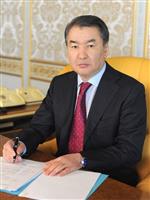
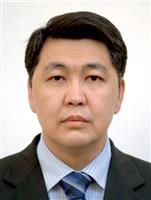
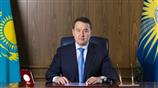
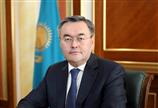
On August 31, 2026, President of the Republic of Kazakhstan Kassym-Jomart Tokayev nominated Yerlan Tynymbaiuly Karin for the position of Vice President of the Republic of Kazakhstan at the meeting of the Kurultai. Following the support of the Kurultai deputies, Yerlan Karin was appointed Vice President of the Republic of Kazakhstan by a Decree of the Head of State.
Head of State Kassym-Jomart Tokayev emphasized at the joint session of the chambers of Parliament on June 30, 2026: “...At the origins of our legislative system stood many outstanding statesmen and public figures whose merits have been recognized both by our people and by the international community.” Together with his colleagues, the legal foundation of the country’s sovereignty and national security was laid by Sabyr Kassymov, a deputy of the first convocation of the Senate (1995–1999), legal scholar, and alumnus of Al-Farabi Kazakh National University.
Through Hardship to a Dream
Driven by a dream of protecting the interests of the people and upholding justice, after graduating from school in 1971, Sabyr submitted his documents to Kazakh State University and demonstrated a high level of knowledge in the entrance examinations. However, he did not pass the competitive selection, but exercised his right to apply for a place in the evening program. The admissions committee’s verdict seemed firm: “No registration, not employed.” The fate of the young man from Russia was decided by Rector Umirbek Dzholdasbekov, who wrote on the application: “Approve, subject to employment.”
At that time, obtaining official registration in the capital was possible exclusively through employment in industrial production. Thus, Sabyr began building his employment record, while the Rector issued an order enrolling him in the Faculty of Law.
Combining work with studies was a major challenge. However, Sabyr devoted himself wholeheartedly to his studies and even helped full-time students prepare their term papers. His fellow students nicknamed him Lomonosov, while his professors encouraged him to transfer to the full-time program. Yet Sabyr had to provide financial support for his family and help his father, a war veteran.
Three years later, Sabyr became a court bailiff at a district court. His colleagues recognized his leadership qualities and elected him secretary of the Komsomol organization, and two years later he was accepted as a candidate member of the Communist Party of the Soviet Union. His determination bore fruit: in 1977, Sabyr successfully defended his graduation thesis, and his professional career began to advance rapidly.
The years 1986–1988 became a severe test of civic maturity. Declining the offered position of Deputy Minister of Justice, Sabyr chose to continue his studies at the Academy of Social Sciences under the Central Committee of the CPSU.
The proposed dissertation topic – “Equality of Nations in the USSR: Political and Legal Issues” – sounded like a challenge within the walls of the Academy. The scholarly work of S. A. Kassymov laid the doctrinal foundation for the political and legal rehabilitation of participants in the December events. At a time when other researchers were constrained by caution and inertia, Kassymov acted ahead of his time, raising taboo issues concerning the national and legal structure of the Soviet state. However, the party system was alarmed by the author’s bold conclusions, and the dissertation was not admitted for defense. Nevertheless, the years of study in Moscow, close interaction with democrats and foreign nationals, were not in vain. They contributed to the final formation of his state-patriotic ideas and his passionate desire to implement them in Kazakhstan.
A turning point came in mid-1990, when the Union was beginning to fall apart and interethnic conflicts were erupting on the outskirts of the state. The Politburo of the Central Committee of the CPSU instructed the Academy of Social Sciences to prepare proposals for expanding the status and powers of the union republics. The leadership of the Academy then remembered its graduate and invited him to Moscow.
The dramatic backdrop to the defense of his dissertation on January 21, 1991, was the crisis in interethnic relations in a fading superpower. Under these circumstances, the scholar demonstrated civic and academic courage. He substantiated principles according to which national issues must not be resolved at the expense of human rights, while genuine sovereignty of the republics required “recognizing their right to secede from the USSR.”
The dissertation author was ahead of his time by declaring the need to establish a Code of Interethnic Relations and to codify the regulatory framework in this area. He insisted on revising union-level legal acts and adopting a law guaranteeing the equality of the republics in resolving matters within the competence of the USSR. Moreover, he substantiated the need to establish interethnic law as a separate branch of law, defining the status, means of protection and guarantees of the rights of nations.
The dissertation author’s recommendations formed the basis of the new Union Treaty and were taken into consideration in preparing its draft on behalf of the Kazakh SSR. It is therefore not surprising that this historic document became an appendix to the dissertation. The experience of forecasting and state planning subsequently developed into large-scale practical activities during his tenure as a member of the Senate.
Service to the Law
The professional career of S. A. Kassymov is an example of devoted service to the ideals of the rule of law. He stood at the origins of the formation of key institutions of sovereign Kazakhstan. Suffice it to say that two conceptual ideas put forward by the scholar – concerning the legal status of refugees and the rehabilitation of victims of political repression – became, with several modifications, the basis for provisions of the Constitutional Law “On State Independence of the Republic of Kazakhstan” dated December 16, 1991. In promoting these historic provisions for the country, he received the support of prominent legal scholars Salyk Zimanov, Sultan Sartayev and Nikolai Akuev.
As a judge of the Constitutional Court during the first years of independence, S. A. Kassymov contributed to laying the foundations of constitutional development. As a member of the Senate Committee on Constitutional Legislation, the Judicial System and Law Enforcement Agencies, the scholar participated in drafting fundamental laws of the young republic. He subsequently spent 13 years ensuring effective interaction between the Head of State and the country’s highest legislative body. In carrying out his public duties, he served on the commission for the closure of military testing sites on the territory of the republic and was also Deputy Chairman of the commission responsible for granting Kazakhstani citizenship, where he actively defended the rights of ethnic Kazakhs returning to their historical homeland.
The scale of his contribution has been recognized through the highest professional distinctions: he was awarded the honorary titles “Lawyer of the Highest Category of the Republic of Kazakhstan” and “Honored Figure of Kazakhstan.”
Contribution to the Rehabilitation of Victims of Repression
It is often said that history is written by historians. But the history of Justice is written by lawyers such as Sabyr Kassymov. From the very first days of sovereignty, he undertook an exceptionally complex and morally responsible mission – restoring the good names of those who had been unjustly erased from the nation’s historical memory. This large-scale work developed over four decades: in 1989–1990, he served as a member of the Commission of the Presidium of the Supreme Soviet of the Kazakh SSR “On the Final Assessment of the December (1986) Events in Alma-Ata.” On November 14, 1991, Kassymov was approved as a member and secretary of the Commission of the Presidium of the Supreme Soviet tasked with examining the resolutions of the KazCEC and the Council of People’s Commissars of the Kazakh ASSR adopted in 1928 and 1930 concerning the confiscation of wealthy households, criminal liability for resistance to confiscation and the eviction of the largest and semi-feudal wealthy landowners, as well as measures to strengthen the socialist restructuring of agriculture and combat kulaks and wealthy landowners.
This commission recognized the resolutions of the KazCEC and the Kazakh Council of People’s Commissars as anti-people measures that had led to political repression. However, consideration of the issue was not brought before the Supreme Soviet for discussion. Kassymov’s proposals, as well as those of other like-minded colleagues, to recognize the aforementioned acts as invalid from the moment of their adoption were rejected by the Presidium on the grounds that the rehabilitation of victims of repression would be incorporated into a law. However, this was not done either.
The next commission, initiated by Senator Kassymov, was established by a Senate resolution on December 5, 1997. It was tasked with studying and restoring historical justice with regard to those who had fought for sovereignty, as well as compatriots and their descendants who had been forced to leave Kazakhstan. Based on international acts and standards concerning the elimination of the consequences of colonialism and the restoration of the rights of those affected, the commission was tasked with providing a political and legal assessment of actions that were clearly repressive in nature under the totalitarian regime, identifying the categories, forms and victims of repression, and establishing the specific features of repression in the country. However, since the deputy was not elected to the second composition of the Senate, the commission ceased its work in 1999.
A conceptual shift in the country’s policy of historical memory became possible only with the accession of Kassym-Jomart Tokayev to the presidency and his declaration of a course toward building a Just Kazakhstan. On November 24, 2020, the President signed the Decree “On the State Commission for the Full Rehabilitation of Victims of Political Repression.” S. A. Kassymov became a member of the Commission and head of its subcommission on methodology. By order of the Prime Minister, he also headed the Project Office of the State Commission, coordinating its work nationwide.
Breakthrough of the Project Office
Seeking to overcome biased approaches and one-sided assessments by some scholars, Kassymov brought political scientists, lawyers, philosophers, linguists, religious studies experts, specialists in historical informatics and cliometrics into the research process. Interdisciplinary analysis and new theoretical and methodological approaches produced positive results. As was particularly noted by the Administration of the President of the Republic of Kazakhstan, employees of the Prosecutor General’s Office, the National Security Committee, the Ministry of Internal Affairs and other government bodies were assigned to the Project Office as the principal body of the State Commission. This made it possible to coordinate the work of 32 working groups throughout the country.
The head of the Project Office had to challenge officials who feared that the truth about the terror would be exposed, hiding behind secrecy classifications. Where other researchers retreated before the closed doors of special archives, Kassymov found ways to open them. Where the system erected barriers marked “top secret,” he acted as a battering ram of justice, addressing the highest authorities in writing with substantiated requests and lists of archival collections requiring declassification.
Drawing on his authority and legal expertise, S. A. Kassymov resolutely initiated and secured the unprecedented declassification of archives held by the National Security Committee, the Ministry of Internal Affairs and the Prosecutor General’s Office of the Republic of Kazakhstan. This required civic courage, as a lingering fear of exposing the truth about the totalitarian past remained in certain levels of government. Thousands of files from the punitive organs “began to speak,” revealing to society the true picture of the tragedy experienced by the people during the period of the “Little October” and the Great Terror. He restored to historians the right to documentary memory and to thousands of families the right to know the truth about their ancestors.
The Project Office prepared and, jointly with the Institute of History and Ethnology, published 72 volumes of materials of the State Commission under the editorship of its Chairman, Yerlan Karin. We historians work with facts and archives, but Kassymov does something more – he gives these facts political and legal significance and state recognition.
S. A. Kassymov’s exceptional personal contribution to restoring historical truth received high recognition: in 2023, his dedicated work was acknowledged with a Letter of Appreciation from President Kassym-Jomart Tokayev.
Behind every great undertaking there is always a person of strong character. Yet such character is not forged in offices – it is tempered through severe trials in life. Sabyr Akhmetzhanuly’s colleagues recall a telling story from the 1980s. Young Judge Kassymov, like many members of his generation who grew up in large families of front-line veterans and lost their fathers at an early age, carried enormous responsibility for his loved ones. While his colleagues had lunch in canteens and cafés, he would get by during his break in his office with nothing more than a bread roll and a bottle of kefir. Every penny he managed to save was sent home to support his younger brothers.
This “judge’s lunch” became a symbol of his integrity and self-sacrifice. It contained more genuine dignity and patriotism than the loudest slogans. A man who endured severe self-restraint for the sake of his family’s future now, with the same self-denial, fights for the future of his people – for the restoration of honor and dignity to every victim and every family. His patriotism is not based on beautiful words, but on the ability to place duty and the needs of others above his own comfort.
S. A. Kassymov’s professional career and civic position became decisive factors in shaping the national policy of historical memory and the triumph of justice. He has pursued this work continuously for nearly 40 years. For him, historical truth is not merely a term, but daily, often difficult and selfless work.
Sabyr Kassymov’s high professional competencies are combined with a strong sense of civic responsibility and patriotism. By carrying the pain of victims and those affected by repression in his own heart, he gives legitimacy to the historical discoveries of his colleagues through his profound legal approach.
On May 27, 2025, the International Center for the Rapprochement of Cultures under the auspices of UNESCO will organize the 7th International Conference in Support of the Culture of Knowledge on the theme “The Birth of Turkic Slavic Studies”, dedicated to the 50th anniversary of the book by the poet and public figure Olzhas Suleimenov “Az i Ya”.
PROGRAM
VII International Conference in Support of Knowledge Culture
on the topic:
"THE BIRTH OF TURKOSLAV STUDIES"
dedicated to the 50th anniversary of Olzhas Suleimenov's book "Az i Ya"
Date and time: May 27, 2025 , Tuesday , 10.00-16.45
(Almaty time), 7.00-15.45
(Central European Time - CET )
Venue: Almaty , address: Zhandosova , 55, Narxoz University (Assembly Hall)
Link to connect to the Conference:
https://us05web.zoom.us/j/89603291552?pwd=fAbblulVqKpuGXbTWRG5o9SWadkoya.1
Conference ID: 896 0329 1552
Access code: Culture
9:30-10.00 Arrival at the conference venue, registration